

1. Introduction
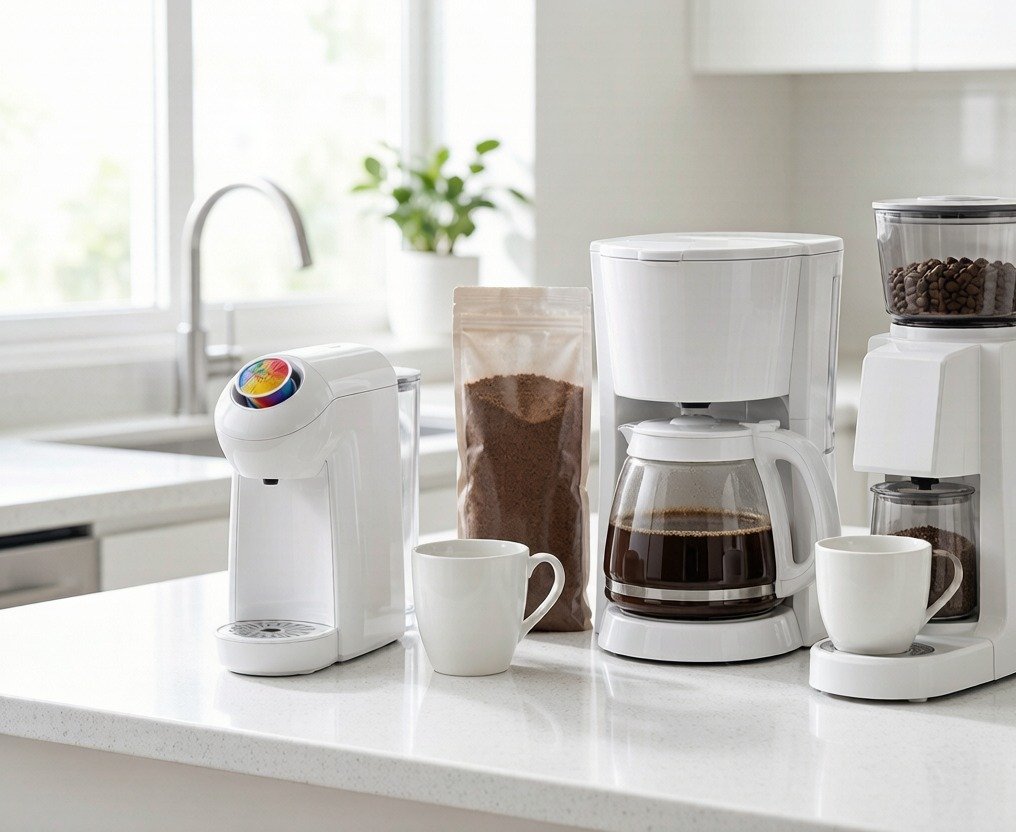
Walk into any grocery store coffee aisle in 2026 and you’re immediately faced with three choices: pods (K-Cups), pre-ground coffee, or whole bean coffee. Each format promises convenience, freshness, or flavor, but which one actually delivers for your specific situation?
The truth is, there’s no single “best” format. The right choice depends entirely on your lifestyle, your equipment, your budget, and, most importantly, how much you care about the taste of your morning cup. After comparing dozens of products across all three formats and weighing factors like cost, freshness, and convenience, we’ve distilled the essentials into this practical comparison.
In this post we’ll break down every dimension that matters: cost per cup, freshness, environmental impact, flavor quality, and convenience. By the end, you’ll know exactly which format, or combination, fits your life, and which machine to buy for each.
2. How We Evaluated
Our Evaluation Approach
At Aesthetic Brew, we compare coffee equipment using manufacturer specifications, retailer listing details, documented features, and documented owner feedback (including verified Amazon reviews). We do not operate an original in-house testing lab, so our rankings reflect how each model’s published specifications and real-world owner experiences line up with common household needs:
Brew Performance (30%):Assessed from manufacturer specifications, documented brew parameters, and owner feedback on crema, flavor clarity, and temperature consistency.
Build & Design (20%):Materials, footprint, water-tank access, and finish evaluated from product documentation and owner reports.
Ease of Use (20%):Setup and daily routines rated from documented workflows and owner feedback for beginners and experienced users.
Value for Money (15%):Features and performance weighed against the listed retail price and typical maintenance costs.
Customer Feedback (15%):Cross-referenced with verified Amazon reviews and other public owner feedback.
3. Quick Comparison Table
Here’s a side-by-side overview of the five top-rated machineswe recommend for each coffee format in 2026:
| Rank | Product | Format | Price | Rating | Type | Best For |
|---|---|---|---|---|---|---|
| #1 | Keurig K-Elite | Pod | $149.99 | 4.4/5 | Single-Serve Pod | Best for Pods |
| #2 | Ninja DualBrew Pro | Hybrid | $189.99 | 4.3/5 | Pod + Ground | Best Hybrid |
| #3 | Technivorm Moccamaster KBGV Select | Ground | $369.00 | 4.6/5 | high-quality Drip | Best for Ground |
| #4 | Breville Smart Grinder Pro | Whole Bean | $149.95 | 4.5/5 | Conical Burr Grinder | Best for Whole Beans |
| #5 | Cuisinart Brew Central | Ground | $99.95 | 4.2/5 | Programmable Drip | Best Budget |
Keurig K-Elite. Best Single-Serve Pod Coffee Maker
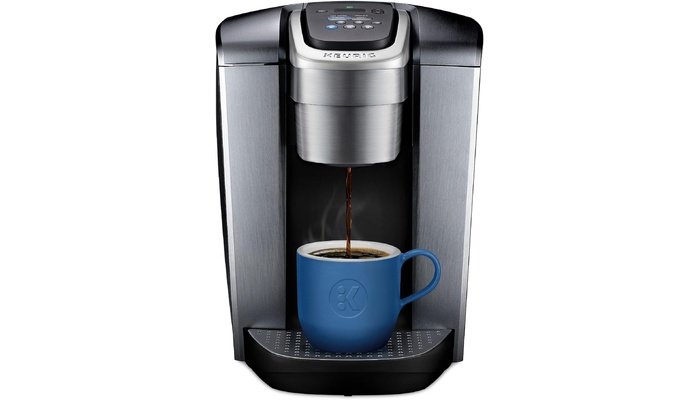
If pods are your format of choice, the Keurig K-Eliteis simply the best pod machine you can buy in 2026. It’s not the cheapest K-Cup brewer on the market, but it delivers noticeably richer, hotter coffee than entry-level models thanks to its stronger brew setting and 187°F brewing temperature.
Key Specifications
What We Loved
The strength control toggleis a genuine big win for K-Cup users. When set to “Strong,” the machine pre-infuses the grounds before brewing, resulting in noticeably bolder, more solid cups, especially for darker roasts. The iced coffee button automatically brews a smaller, concentrated shot made to be poured over ice without tasting watered down. The large 75 oz reservoir means fewer refills, and the included reusable filter lets you use your own ground coffee when you want to step beyond pods.
What Could Be Improved
K-Cup pods generate significant waste and cost more per cup than whole-bean or ground coffee. Even on “Strong” mode, the brew can’t match the depth of freshly ground drip or pour-over. The machine requires regular descaling and needle maintenance to prevent clogs.
Pros
- Produces hotter, richer coffee than basic Keurigs
- Iced coffee button brews concentrated shots over ice
- Large 75 oz reservoir reduces refill frequency
- Includes reusable filter for ground coffee flexibility
- Sleek brushed silver finish looks great on any counter
Cons
- high-quality price point for a pod machine
- Limited by available K-Cup flavors
- Plastic-heavy construction doesn’t feel high-quality
- Descaling required every 3–6 months
Ninja DualBrew Pro CFP301. Most flexible Pod + Ground Coffee Maker
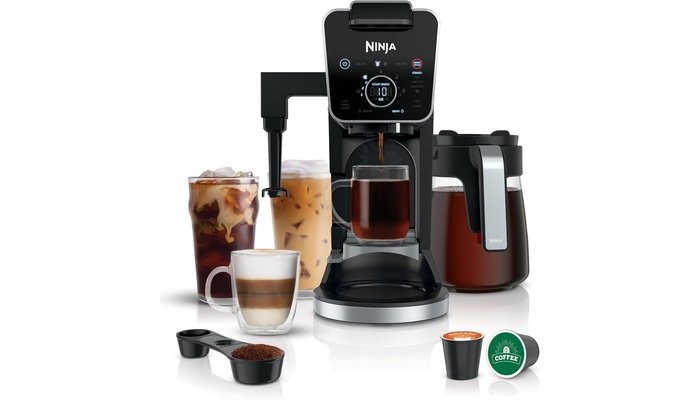
Can’t decide between pods and ground coffee? The Ninja DualBrew Proeliminates that dilemma entirely. This brilliantly engineered hybrid systemaccepts both K-Cup pods and loose ground coffee, and brews each format equally well, which is rarer than you’d think.
Key Specifications
What We Loved
What makes the DualBrew Pro special is its 12-cup glass carafealongside single-serve capability. Most pod machines brew only one cup at a time; the Ninja does both, a full pot for Sunday brunch or a quick K-Cup on a Tuesday morning. Its four brew styles (Classic, Rich, Over Ice, Specialty) genuinely produce different flavor profiles, the Specialty mode makes proper concentrated coffee for lattes, and the included frother handles milk-based drinks.
What Could Be Improved
It takes up significant counter space with the carafe attached, and the button layout has a learning curve. The build quality feels more plastic than the price suggests, and switching between pod and ground modes can be slow.
Pros
- Genuinely excellent at both pod and ground brewing
- Specialty brew makes concentrated coffee for lattes
- Permanent filter included (no paper filters)
- Hotter brew temperature than most (up to 195°F)
- Frother attachment included for milk drinks
Cons
- Takes significant counter space with carafe
- Learning curve with all the buttons and settings
- Build quality feels more plastic than the price
- Can be slow switching between pod and ground modes
Technivorm Moccamaster KBGV Select. Best high-quality Drip Brewer for Ground Coffee
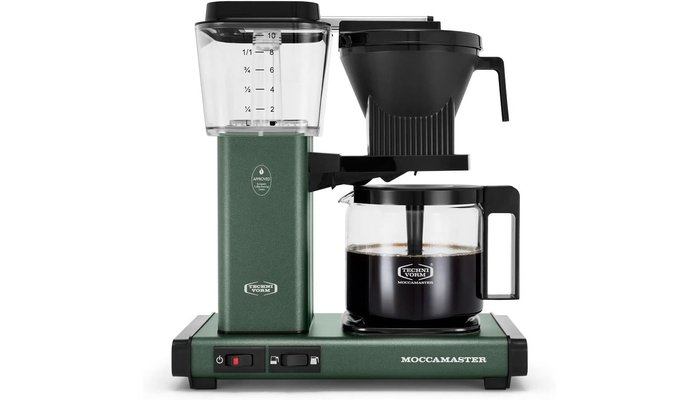
If you’re buying pre-ground coffee (or grinding your own), the Technivorm Moccamaster KBGV Selectis the brewer that will extract every bit of flavor from those grounds. Handmade in the Netherlands since 1968, it’s the only home drip brewer certified by the Specialty Coffee Associationfor meeting strict gold standards for water temperature, saturation, and brew time.
Key Specifications
What We Loved
The KBGV Select model adds a game-changing brew basket control dialthat lets you adjust the flow rate, fast flow for light roasts (brighter cup), slow flow for dark roasts (fuller body). Combined with its copper heating element that maintains 196–205°F throughout the entire brew cycle, this machine produces drip coffee that rivals pour-over quality automatically. With a 5-year warranty and 15+ year lifespan, it’s the last drip brewer you’ll need.
What Could Be Improved
At $369 it’s an investment-level purchase, with no programmability or timer, intentional simplicity that convenience-seekers may miss. There’s no auto-shutoff for the heating element during brew, and the thermal carafe version costs significantly more.
Pros
- SCA-certified brewing parameters for optimal extraction
- Adjustable flow rate dial is genuinely useful
- Hand-built in Netherlands with 5-year warranty
- Hot plate auto-shutoff after 100 minutes
- Consistent café-quality drip, pot after pot
Cons
- Expensive, an investment-level purchase
- No programmability or timer (intentionally simple)
- No auto-shutoff for heating element during brew
- Thermal carafe version costs significantly more
Breville Smart Grinder Pro (BCG820BSS) — Best Burr Grinder for Whole Bean Coffee
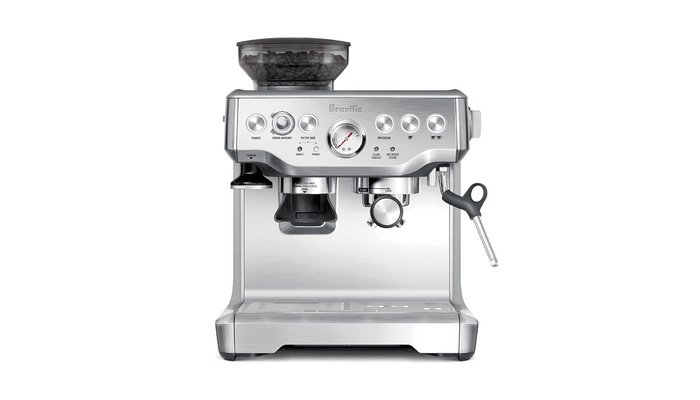
Choosing whole bean coffee means committing to a grinder, and if you’re going to commit, make it the Breville Smart Grinder Pro. This is the grinder that bridges the gap between consumer appliances and professional equipment, delivering consistent particle distribution that dramatically improves extraction regardless of your brewing method.
Key Specifications
What We Loved
The key differentiator is precision grind control: a continuously adjustable dial with an LCD display showing exactly which setting you’re on. It remembers your last setting for each grind type (espresso, drip, French press), so you’re not re-dialing every morning. The conical stainless steel burrs stay sharp for years, and anti-static materials reduce mess, a genuine pain point with cheaper grinders.
What Could Be Improved
Grind retention (~2g inside the chamber) affects dose precision slightly. It requires regular burr cleaning for peak performance. While not cheap, cheaper grinders false-economize in the long run. And like all electric grinders, it can be noisy during operation.
Pros
- Consistent grind size is the foundation of great coffee
- Memory function stores settings per grind type
- Hands-free portafilter holder saves time
- Anti-static design significantly reduces mess
- LCD display makes settings easy to replicate
Cons
- Grind retention (~2g) affects dose precision slightly
- Requires regular burr cleaning for peak performance
- Not cheap, but cheaper grinders false-economize
- Can be noisy during operation
Cuisinart Brew Central DCC-1200P1. Best Value Programmable Coffee Maker
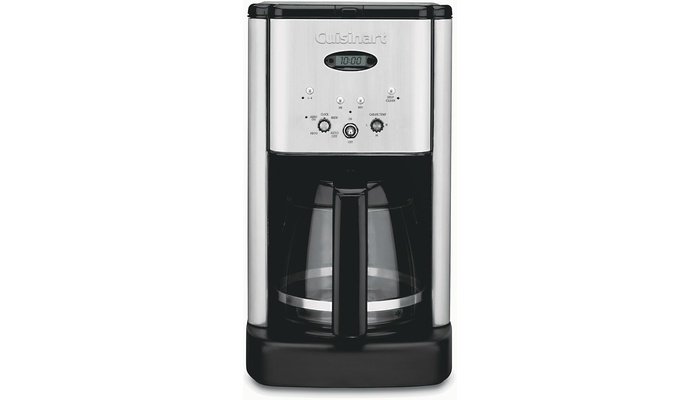
Not everyone wants to spend $300+ on a coffee setup. The Cuisinart Brew Centralhas been a bestseller for over two decades because it delivers solid, dependable drip coffee at a fraction of the high-quality price. For anyone starting their pre-ground coffeejourney, this is the sensible first machine.
Key Specifications
What We Loved
What it lacks in SCA certifications, it makes up for in practical features: a fully programmable timer (wake up to freshly brewed coffee), a 12-cup glass carafe with ergonomic handle, a charcoal water filter that improves taste, and a pause-and-serve function. The brushed stainless steel finish looks far more expensive than its price tag, and with nearly 18,000 verified reviews, it’s a most thoroughly vetted appliances you can buy.
What Could Be Improved
Brew temperature runs cooler than SCA ideal (around 190°F). There’s no thermal carafe option, coffee cools on the hot plate. The carafes are fragile and replacements add up over time, and it’s not good for coffee snobs who want precise control.
Pros
- Incredible value with proven reliability
- Programmable timer means waking up to fresh coffee
- Pause-and-serve is useful for impatient mornings
- Charcoal water filter noticeably improves taste
- Timeless design still looks current after 20+ years
Cons
- Brew temperature runs cooler than SCA ideal
- No thermal carafe option, coffee cools on hot plate
- Carafes are fragile and replacements add up
- Not good for coffee snobs who want precise control
9. Buying Guide: Which Format Is Right for You?
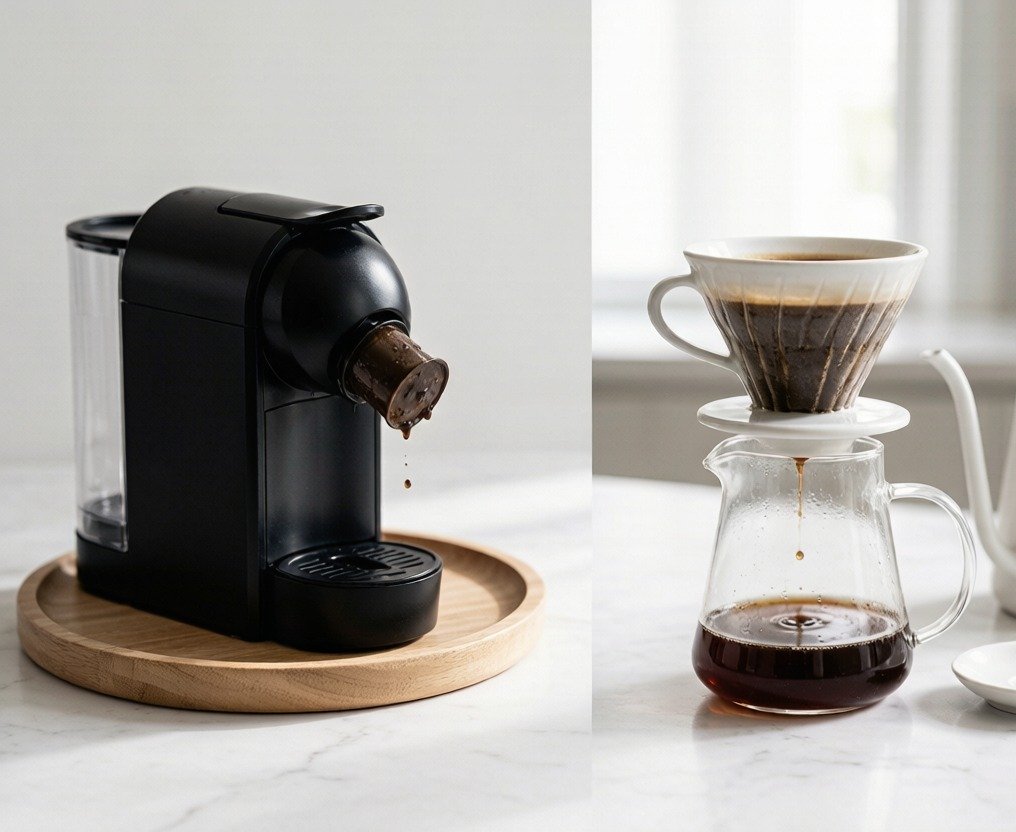
Choosing the right coffee formatcomes down to understanding your priorities. Here’s how to decide:
Choose Coffee Pods (K-Cups) If…
You value speed above all else— under 60 seconds from button press to drinking. Your household has different taste preferences (each person picks their own pod). You don’t want to clean grinders, filters, or portafilters, ever. And you’re okay spending $0.50–$1.20 per cup for the convenience trade-off.
Recommended machine:Keurig K-Elitefor pure pod brewing, or Ninja DualBrew Proif you want pod + ground flexibility.
Choose Pre-Ground Coffee If…
You want better flavor than podsbut aren’t ready for a grinder investment. You brew a full pot at once (family, roommates, or meal-time coffee drinker). You appreciate variety, any roast, origin, or blend available in ground form. And you plan to use ground coffee within two weeks of opening the bag.
Recommended machine:Technivorm Moccamasterfor maximum quality, or Cuisinart Brew Centralfor budget-conscious buyers.
Choose Whole Bean Coffee If…
Flavor is your top priority— nothing beats freshly ground coffee. You own (or will buy) a quality burr grinder, blade grinders don’t count. You enjoy the ritual of coffee preparation. You brew using methods that require specific grind sizes (espresso, pour-over, AeroPress). And you’re willing to invest 2–3 extra minutes per session for significantly better results.
Essential companion:Breville Smart Grinder Pro— whole beans are useless without a good grinder. Pair it with any quality brewer (Moccamaster for drip, Bambino Plus for espresso).
The Hybrid Approach (What Most People Actually Do)
Here’s the secret serious coffee drinkers won’t tell you: you don’t have to pick just one. Many households run a dual setup, a pod machine for weekday mornings when speed matters, and a grinder + brewer for weekend leisure brewing. The Ninja DualBrew Pro literally puts both formats in one machine. There’s no shame in convenience during the week and craftsmanship on weekends.
10. Frequently Asked Questions
Is pre-ground coffee really that much worse than freshly ground?
Yes, and the science backs it up. Once coffee is ground, its surface area increases by roughly 10,000x, accelerating oxidation and CO2 loss. Within 15 minutes of grinding, a noticeable portion of volatile aromatics has already escaped. After 24 hours, pre-ground coffee has lost roughly 60% of its aromatic compounds compared to fresh-ground. In everyday drinking, the drop in aroma and brightness is usually obvious once pre-ground coffee sits for a day.
Are K-Cups really bad for the environment?
The environmental impact is significant but improving. Traditional K-Cups combine plastic, aluminum, and organic material in one non-recyclable unit, billions end up in landfills annually. However, Keurig has committed to 100% recyclable pods by 2026, and many third-party brands already offer compostable or fully recyclable alternatives. Using a reusable K-Cup filter with ground coffee eliminates almost all waste.
How long do coffee beans stay fresh after opening?
Properly stored (airtight container, cool dark place, away from moisture), whole beans maintain peak freshness for about 3–4 weeks after opening. After grinding, that window shrinks to 15–30 minutes for peak quality. Pre-ground coffee in a sealed bag stays reasonably fresh for 1–2 weeks after opening, then declines rapidly. Buy only what you’ll consume within a month, and never refrigerate or freeze coffee (condensation kills flavor).
Which format offers the lowest cost per cup?
Whole bean coffee wins on pure economics. At typical 2026 prices: whole beans average $0.15–$0.55/cup, pre-ground averages $0.18–$0.45/cup, and K-Cups average $0.50–$1.20/cup. Factor in equipment, a decent burr grinder ($100–$250) and quality brewer ($100–$300) add upfront investment that takes 6–18 months to offset. If you drink 2+ cups daily, whole bean pays for itself within a year.
Can I use any coffee format with any machine?
No, compatibility matters. Pod machines only accept compatible pods (most use K-Cup standard). Drip brewers and pour-over devices need ground coffee (store-bought pre-ground or freshly ground from beans). Espresso machines require finely ground coffee. French press needs coarse grind. Always match your grind size to your brewing method, wrong grind size equals wrong extraction, regardless of bean quality.
Do I really need a separate grinder for whole bean coffee?
If you’re serious about flavor, yes, and specifically a burr grinder, not a blade “chopper.” Blade grinders produce inconsistent particle sizes (some powder, some chunks) that lead to simultaneous over- and under-extraction. A burr grinder produces uniform particles for even extraction. The taste difference between blade-ground and burr-ground coffee is dramatic, even to non-snob palates. A good burr grinder is the single highest-ROI upgrade any coffee drinker can make.
11. Final Verdict
After weighing all three formats across dozens of products, here’s our honest conclusion: there is no single “best” coffee format, only the best format for you.
For most people starting out, begin with a hybrid approach. Get a machine like the Ninja DualBrew Prothat handles both pods and ground coffee. Use pods on busy weekdays, try pre-ground on slower mornings, and see which rhythm fits your life.
For flavor seekers, go whole bean with a Breville Smart Grinder Propaired with a quality brewer like the Moccamaster. The improvement in taste over pods or pre-ground is transformative, once you experience properly extracted fresh-ground coffee, it’s hard to go back.
For convenience-first users, the Keurig K-Elitedelivers the best pod experience available. It’s not artisanal coffee, but it’s consistently good, incredibly fast, and requires zero cleanup. Sometimes that’s exactly what you need.
The best format isn’t the one coffee snobs say you should use, it’s the one you’ll actually use every day. Start where you are, upgrade when you’re ready, and never let perfection be the enemy of a good morning cup.
Some links on this page are affiliate links. If you purchase through these links, we may earn a small commission at no extra cost to you. Our editorial content is created independently, and commissions do not influence our recommendations. Learn more.


